3.5 million digital identities activated through Sanad, minister says
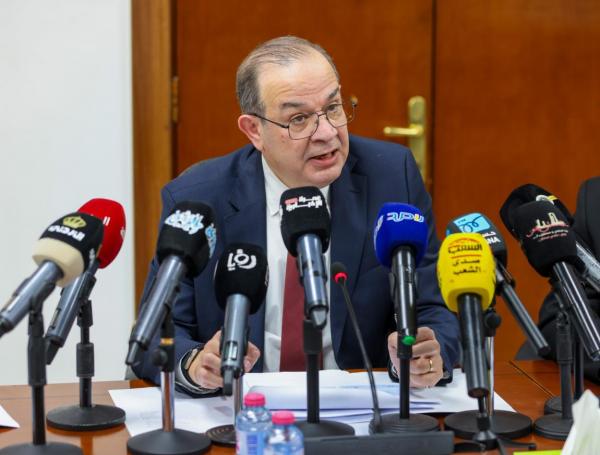
The Parliamentary Finance Committee, chaired by MP Dr. Suleiman Kharabsheh, discussed on Saturday the budgets of the Ministry of Digital Economy and Entrepreneurship, the National Cyber Security Center, the Telecommunications Regulatory Commission, Jordan Post Company, and the Postal Savings Fund, as part of its discussions of the draft General Budget Law for the 2027 fiscal year.
The meeting was attended by Minister of Digital Economy and Entrepreneurship Sami Samirat, the Ministry's Secretary-General for Administrative and Financial Affairs Samira Al-Zoubi, Chairperson of the Telecommunications Regulatory Commission's Board of Commissioners Lara Al-Khatib, Jordan Post Director General Hanadi Al-Tayeb, Postal Savings Fund Director General Dhamam Khreisat, National Cyber Security Center's Institutional Support Director Mutasem Maryan, Director General of the General Budget Department Ayman Abu Al-Rub, and several officials.
Kharabsheh stressed the importance of reviewing the institutions' achievements, future plans and programs, and hearing their explanations regarding financial allocations and spending priorities for the coming year. He emphasized the need to complete infrastructure, digital transformation, e-government and national fiber-optic network projects, while strengthening digital skills and empowering the telecommunications, information technology and postal sectors.
He noted that the Ministry of Digital Economy and Entrepreneurship has been allocated approximately JD 47.8 million, an increase of nearly JD 9 million, and asked how these allocations would translate into the implementation of its plans and projects.
He also inquired about Jordan Post's revenues, expenditures, debt and plans to increase income; the Postal Savings Fund's revenue sources and returns to depositors; the adequacy of the National Cyber Security Center's allocations to develop its capabilities and attract qualified professionals; and the Telecommunications Regulatory Commission's revenues and mechanisms for monitoring companies and protecting subscribers' rights.
MPs, in turn, raised issues related to digital sovereignty, the protection of government data, the continuity of digital transformation projects, strengthening students' digital resilience, positioning Jordan as a regional hub for e-commerce and logistics services, supporting electronic gaming companies, and monitoring cyber threats and breaches.
They also stressed the importance of measuring the economic returns of digital transformation projects, expanding government service centers across governorates, and creating employment opportunities for young people.
For his part, Samirat reviewed the ministry's achievements in digital transformation, noting that the number of government service centers had increased to 16 across the Kingdom's governorates. The centers provide 265 services through 35 government entities and have processed approximately eight million transactions.
He said the number of activated digital identities through the Sanad application had reached 3.5 million, while the digitization rate of government services stood at 91%, with a target of reaching 100% by the end of this year.
He added that 550,000 electronic payment transactions worth JD 19 million had been completed through the application.
The minister further noted that the ministry had trained approximately 20,000 students in digital skills, while its programs had helped create around 5,800 job opportunities and supported more than 100 startups. Additionally, 9,000 government employees had received training in artificial intelligence applications.
He also highlighted the launch of the Ajyal educational platform and the Sanad for Business application, as well as the expansion of digital healthcare services to include 10 peripheral hospitals.
He pointed out that the government hospital bed management program had helped save approximately JD 7 million in costs associated with transferring patients to private-sector hospitals.
For her part, Al-Khatib said telecommunications sector revenues amounted to approximately JD 151.2 million, while investments in the sector reached around JD 191 million in 2025. The sector directly employed 4,363 people and provided more than 10,000 indirect jobs.
She added that postal services sector revenues had increased from JD 55 million in 2020 to JD 160 million in 2025, highlighting the sector's role in supporting the national economy, employment and e-commerce.
She said the commission's priorities include updating legislative and regulatory frameworks, strengthening oversight of telecommunications service quality and coverage, addressing the digital divide, keeping pace with emerging technologies, and developing postal services.
Meanwhile, Al-Tayeb said Jordan Post had repaid approximately JD 15 million of its debt and generated JD 10 million in operating revenues in 2025, excluding government support allocated for providing universal postal services.
She explained that the company was implementing a strategic plan to develop postal and financial services, strengthen digital transformation, promote e-commerce and financial inclusion.
She also highlighted the launch of the Barid Pay digital wallet and the establishment of the International E-Commerce Academy, which has trained approximately 3,000 young men and women. The company's future plans include establishing a regional logistics hub and a customs center for e-commerce, as well as developing warehousing and returns services.
For his part, Khreisat said the Postal Savings Fund had carried out more than 5,000 financing transactions during the current year and distributed returns of 1.75% on savings accounts, while returns on investment deposits ranged between 4.5% and 5%.
He explained that revenues generated from financing operations amounted to approximately JD 2.5 million, while the fund's available cash balances held with banks stood at JD 5 million.
He added that the fund had automated financing procedures and developed electronic services to reduce operating costs and improve efficiency.
For his part, Maryan said the National Cyber Security Center was working to establish an integrated national framework to protect cyberspace and strengthen responses to cyber incidents.
This includes establishing sectoral response centers across nine vital sectors and developing round-the-clock monitoring and surveillance capabilities.
He explained that the center's 2027 budget stands at approximately JD 17.7 million, an increase of nearly JD 5.5 million, while capital allocations amount to approximately JD 6.587 million.
These allocations will fund projects to develop technical infrastructure, strengthen cyber defense, and deploy artificial intelligence technologies to detect threats and cyberattacks.
He added that the center plans to recruit 141 new employees and attract specialized talent, noting that the increase in current expenditures is linked to the center's relocation to its permanent headquarters at the Al-Istiqlal Building, which carries an annual rental cost of JD 500,000.
comments
3.5 million digital identities activated through Sanad, minister says

comments