Government issues 2027 Budget Circular, including JD30 pay rise for employees and retirees
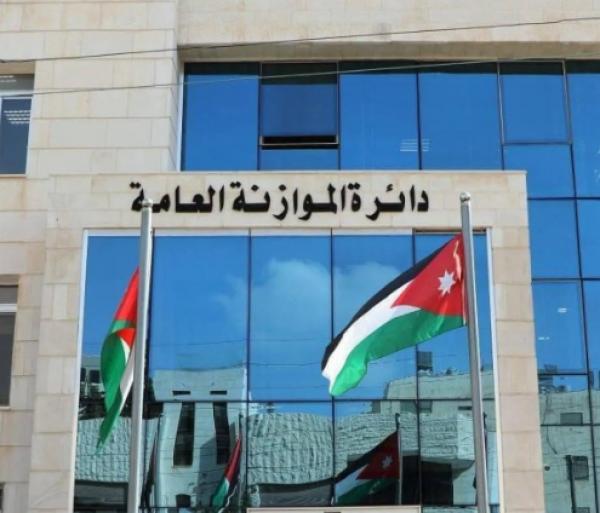
The government has issued Official Circular No. (17) of 2026 for the preparation of the draft General Budget Law and the draft Government Formations System for ministries, departments and government units for the 2027 fiscal year. The circular includes an additional monthly pay rise of JD30 for public sector employees, members of the military, and retired civilian and military personnel whose total salaries are below JD600.
The circular also includes the regular annual salary increments for employees, as well as the regular annual increases in pension allocations for civilian and military retirees.
Under the circular, all ministries, departments and government units are required to prepare detailed budget proposals for the 2027–2029 period, in accordance with their allocated ceilings, and submit them to the General Budget Department no later than November 5, 2026. The proposals must also include capital projects for the governorates.
The circular was issued as a preliminary step towards completing the draft General Budget Law, discussing it and proceeding with the procedures for its approval in accordance with the provisions of the Constitution, alongside the preparation of the draft Government Formations System for ministries, departments and government units.
The preparation of the budget is based on Royal directives to complete the implementation of the second phase of the Economic Modernisation Vision and the Public Sector Modernisation Roadmap for 2026–2029, achieve inclusive and sustainable growth, improve citizens' quality of life, ease living burdens, strengthen the social protection network, continue financial and economic reforms, and reduce public debt.
Budget Priorities
The government aims to increase capital expenditure and spending on social protection programmes, while rationalising and controlling public expenditure to ensure the optimal use of available resources. The priorities also include stimulating economic sectors, continuing to implement initiatives and projects linked to the Economic Modernisation Vision and Public Sector Modernisation Roadmap, and boosting domestic revenues.
These priorities include continuing the implementation of the second executive programmes of the Economic Modernisation Vision and Public Sector Modernisation Roadmap, achieving the targets of the National Financial and Economic Reform Programme, improving citizens' living standards, and enabling them to cope with economic and living conditions.
They also include continuing to reduce the primary deficit and public debt as a percentage of GDP, developing the capabilities of the Jordan Armed Forces and security agencies, encouraging domestic investment and attracting foreign investment, improving the business environment, and prioritising public-private partnership projects, particularly in the infrastructure, water, transport, energy and health sectors.
The government will also focus on addressing the development needs of the governorates, upgrading healthcare services and expanding health insurance coverage, developing education and human resources, qualifying teachers, improving early childhood programmes, completing the construction and rehabilitation of schools, and expanding free school transportation services.
Other priorities include developing the social care and protection system, continuing to implement the economic empowerment policy for beneficiaries of the National Aid Fund, strengthening food security and the strategic stockpile of essential commodities, supporting local production, advancing the tourism and industrial sectors, and developing transport, water and energy services.
The priorities also include continuing digital transformation, improving government services, strengthening cybersecurity, supporting municipalities and easing their financial burdens, and accelerating the implementation of projects funded through grants and assistance provided by countries and international institutions.
Economic Indicator Projections
The 2027 budget is based on projections that real GDP will grow by 3.1% in 2027 and 3% in each of 2028 and 2029. Nominal GDP is expected to grow by 5.6% in 2027 and 5.5% in each of 2028 and 2029.
Inflation is projected to reach 2.3% in 2027 and 2.2% in both 2028 and 2029, while exports are expected to grow by 9.2% in 2027, 7.7% in 2028 and 7.2% in 2029.
Imports are also projected to grow by 8.2% in 2027, 4.3% in 2028 and 5% in 2029. Meanwhile, the current account deficit in the balance of payments is estimated at approximately 5.7% of GDP in 2027, declining to 5% in 2028 and 4.7% in 2029.
Financial Assumptions and Measures
The financial assumptions include allocating the necessary funds for projects under the second executive programmes of the Economic Modernisation Vision and Public Sector Modernisation Roadmap, as well as the additional JD30 monthly salary increase for employees whose total salaries are below JD600, alongside regular annual salary and pension increases.
The circular also stipulates that recruitment should be limited to vacant positions and newly created posts included in the Government Formations System for ministries, departments and government units, in accordance with the instructions governing the quantitative and objective assessment and analysis of public sector jobs.
The measures also include allocating the necessary funds to support and develop the Jordan Armed Forces and security agencies, introduce modern technologies and smart systems into their operations, cover domestic and external public debt interest payments, control expenditure, and rationalise the use of fuel, electricity, water, stationery and travel, as well as regulate the use of government vehicles.
They also include allocating funds to support strategic commodities, maintaining the fixed prices of bread and gas cylinders, strengthening the strategic stockpile of wheat and barley, supporting the National Aid Fund, covering medical treatments, medicines and medical supplies, providing treatment for cancer patients, and expanding health insurance coverage.
The allocations will also cover supplying industrial cities with natural gas, public-private partnership projects, particularly the government's contributions to the National Water Carrier and railway projects, capital budgets for the governorates, municipal development, support for universities, and increasing allocations to the University Student Support Fund.
The measures further include financing strategic projects in the water, energy, transport, health and education sectors, advancing tourism, supporting digital transformation, developing infrastructure, operating systems and software, utilising artificial intelligence tools, and strengthening cybersecurity, in addition to covering financial obligations, outstanding arrears and land acquisition costs.
The circular stipulates allocating funds for major new projects in 2027, provided they are registered in the National Register of Government Investment Projects and approved by the Ministry of Planning and International Cooperation. These projects must also include studies assessing their impact and climate-related risks.
The measures also include following up on the implementation of projects arising from the National Strategy for Jordanian Women, improving the budget's responsiveness to the needs of both genders, covering commitments under grant programme agreements with international entities, and prohibiting the purchase of services from personnel except in justified cases and with the approval of the Prime Minister.
Requirements for Preparing Budget Proposals
The circular requires ministries, departments and government units to update their strategic plans, including their vision, mission, objectives, programmes and responsibilities, and to outline their contribution to achieving national goals.
They must also include performance measurement indicators, supporting data, the values achieved during the previous year, an initial assessment of the indicators targeted for 2026, and the indicators to be achieved during the 2027–2029 period.
They are also required to identify the objectives of each programme, the services it provides, the entities responsible for its implementation, the challenges facing these programmes and the proposed measures to address them. They must also provide details of their human resources, including staffing numbers and their distribution by gender and programme.
The circular stressed the need to take into account indicators related to the needs of women, children, young people and persons with disabilities, and link them to the relevant strategic objectives and programmes. It also called for identifying climate change priorities, the measures required to address them and the expected outcomes.
The circular emphasised that all ministries, departments and government units must comply with the specified instructions and expenditure ceilings, contributing to the achievement of fiscal policy objectives, controlling the fiscal deficit and managing public debt growth rates during the 2027–2029 period.
comments
Government issues 2027 Budget Circular, including JD30 pay rise for employees and retirees

comments