Chemical industries strategy targets higher compliance with international standards
The Kingdom aims to strengthen the competitiveness of its chemicals and cosmetics industries by promoting innovation, improving compliance with international standards and expanding the development of higher-value products under its national sectoral strategy for 2027–2029.
The strategy targets increasing the share of products that comply with international standards to 85% by 2029, up from a baseline of 65% in 2027. It also aims to raise the proportion of new or upgraded products in the sector from 8% in 2027 to 15% by 2029.
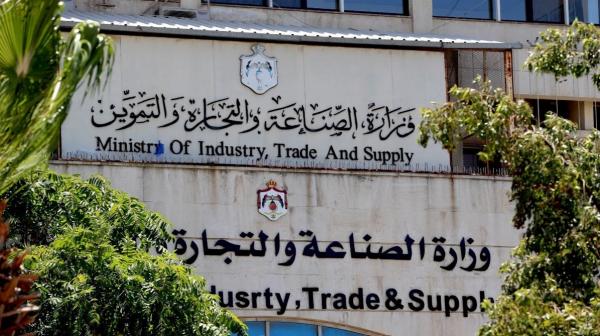
According to the strategy document prepared by the Ministry of Industry, Trade and Supply, with support from the Economic Reform Program and in partnership with the Jordan Chamber of Industry and relevant public- and private-sector stakeholders, the annual number of registered patents and new formulations is expected to increase from five in 2027 to 15 in 2029.
Product development is a central pillar of the strategy, particularly through the 'High Value' program, which aims to introduce innovative products, develop new formulations and establish differentiated production lines.
The strategy also includes the 'Compliance' program, which seeks to help manufacturers meet international standards and regulatory requirements, including the European Union’s Carbon Border Adjustment Mechanism (CBAM) and the Registration, Evaluation, Authorisation and Restriction of Chemicals (REACH) framework, as well as adopt sustainability certifications.
The strategy outlines six programs designed to address the sector’s main development priorities. 'Efficiency' focuses on boosting productivity through technological upgrades, energy conservation and operational digitalization. 'High Value' supports product development, while 'Integration' aims to connect factories through integrated industrial clusters and strengthen logistics infrastructure and supply chains.
The 'Empowerment' program seeks to improve access to affordable financing, develop workforce skills and simplify the legislative framework. 'Market Access' focuses on targeted regional expansion, market-driven exports and strategic supply contracts. The sixth program, 'Compliance,' aims to improve adherence to international standards and regulatory requirements.
The strategy identifies opportunities to expand the production of natural cosmetics, environmentally friendly products and specialized chemicals with higher profit margins. It also highlights packaging innovation as a means of increasing product value and strengthening competitiveness in domestic and international markets.
An assessment of the sector’s value chain highlights Jordan’s natural resources as an important foundation for industrial development. Locally available inputs, including phosphate, potash and Dead Sea minerals, support the production of basic chemicals, fertilizers and certain cosmetic products.
However, downstream industries, including detergents, paints and cosmetics, continue to rely on imported intermediate materials and industrial components. The strategy notes that limited development in packaging, marketing and brand building constrains domestic value creation. Weak integration between intermediate-material production and distribution and marketing activities also limits opportunities to maximize value across the production chain.
To address these challenges, the strategy calls for greater investment in product development and innovation, the creation of export-oriented brands, and the development of intermediate and finished-product industries.
It also proposes establishing a research, development and innovation centre focused on value chains linked to potash and phosphate, with the aim of connecting scientific research more closely to industrial needs.
Additional proposals include establishing a national industrial research and development fund and strengthening cooperation between universities and factories to address gaps in research and development and support product innovation. The strategy also recommends launching a unified Jordanian brand initiative for cosmetics and specialised chemicals.
The strategy emphasises that the sector’s transition towards higher-value products will depend on strengthening industrial, marketing and research capabilities. These improvements are intended to help companies develop more specialised products and enhance their ability to compete in local and international markets.
Earlier this month, the Ministry of Industry, Trade and Supply announced the launch of three sectoral strategies for 2027–2029 covering the engineering, food, chemicals and cosmetics industries.
The strategies form part of broader efforts to develop Jordan’s industrial sector, improve productivity and competitiveness, and advance the high-value industries driver under the Economic Modernisation Vision. They seek to establish clear priorities, initiatives and projects with measurable economic impact, supported by performance indicators and defined targets, with the aim of increasing the industrial sector’s contribution to economic growth, exports, investment and employment.
comments
Chemical industries strategy targets higher compliance with international standards

comments