FM: War on Iran threatens regional stability, global economy
Deputy Prime Minister and Minister of Foreign and Expatriates Affairs Ayman Safadi said the war on Iran has contributed to destabilising the region and threatening energy supplies.
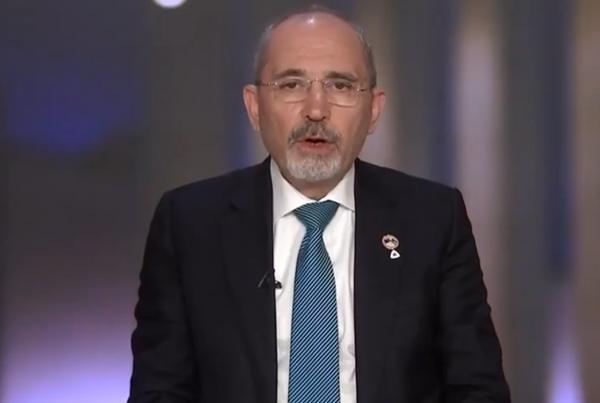
In an interview with Australia's ABC on Tuesday, monitored by 'Ammon News', Safadi said Jordan and its partners had been working to deescalate through a deal that would ensure the reopening of Hormuz and to ensure the security and stability of the whole region.
He said Jordan was working closely with the United States and regional partners to bring an end to the war, warning that its continuation would have increasingly severe consequences for regional stability, global markets and energy supplies.
Safadi said regional countries supported mediation efforts led by Qatar, Türkiye, Egypt and others to find a way out of the conflict.
He stressed that any peaceful solution must ensure compliance with international law, respect the sovereignty and stability of regional countries, and strengthen good-neighbourly relations.
'We want an answer that addresses all roots of tension, and that's what we're working with our partners on,' Safadi said.
*Palestinian issue
Safadi said Israel must stop the illegal measures undermining the two-state solution, which he said the majority of the international community considers the only path to a just and lasting peace for Palestinians, Israelis and the wider region.
He said Jordan was working with international partners, including Australia, to pressure Israel to stop provocative measures that risk pushing the region towards further conflict.
Safadi stressed that Jordan remained committed to the rights of the Palestinian people and opposed measures that undermine peace.
Jordan and Australia seek to strengthen bilateral cooperation
Safadi said that His Majesty King Abdullah II's visit to Australia aimed to build on the two countries' longstanding friendship and explore opportunities to expand cooperation.
He identified trade, investment, tourism, culture and other areas as potential fields for closer bilateral ties.
Safadi said Jordan and Australia had significant opportunities to strengthen their partnership and work together to advance peace, security and stability in the region.
Also, Safadi welcomed Australia's decision to recognise the State of Palestine, praising its policies and efforts to promote peace in the region.
Safadi called for coordinated international action to protect the prospects of the two-state solution, uphold international law and ensure the Palestinian people's right to live in dignity and justice.
*Palestinian elections
Safadi said Jordan had been working with regional and international partners, including Australia, to encourage Palestinian reforms, describing them as necessary.
He said the Palestinians had announced elections but decided in recent days not to proceed, citing obstacles imposed by Israel.
Safadi pointed to Israeli restrictions, including approximately 1,000 checkpoints between Palestinian cities and villages and restrictions preventing the establishment of polling centres.
He said these challenges needed to be overcome to allow elections to take place and enable Palestinians to choose their leadership and renew its legitimacy.
Despite the obstacles, Safadi stressed that elections should be held at the appropriate time to allow Palestinians to exercise their democratic rights and renew their leadership's mandate.
*Trump's Gaza plan
Safadi said regional countries had supported US President Donald Trump's plan because it was the only proposal that would have ended the massacre in Gaza.
A year after the plan was introduced, he stressed the need for its full implementation, particularly its humanitarian provisions.
'Winter has come, 2 million Palestinians are squeezed into a wasteland of despair in 30% of Gaza, aid is not sufficiently coming into Gaza, tents are not there, medical services are not available, 700,000 Palestinian kids in Gaza have not had any kind of formal education for the past three years,' Safadi stated.
He called on Israel to allow more humanitarian assistance into the territory, warning that the crisis was worsening because Israel had failed to fulfil its commitments to facilitate sufficient aid deliveries.
Safadi said Hamas had agreed to a decommissioning plan that the Board of Peace had accepted as sufficient, while Israel had not accepted it.
He stressed that the immediate priority should be the full implementation of the Gaza plan and addressing the territory's worsening humanitarian crisis.
Deputy Prime Minister and Minister of Foreign and Expatriates Affairs Ayman Safadi said the war on Iran has contributed to destabilising the region and threatening energy supplies.
In an interview with Australia's ABC on Tuesday, monitored by 'Ammon News', Safadi said Jordan and its partners had been working to deescalate through a deal that would ensure the reopening of Hormuz and to ensure the security and stability of the whole region.
He said Jordan was working closely with the United States and regional partners to bring an end to the war, warning that its continuation would have increasingly severe consequences for regional stability, global markets and energy supplies.
Safadi said regional countries supported mediation efforts led by Qatar, Türkiye, Egypt and others to find a way out of the conflict.
He stressed that any peaceful solution must ensure compliance with international law, respect the sovereignty and stability of regional countries, and strengthen good-neighbourly relations.
'We want an answer that addresses all roots of tension, and that's what we're working with our partners on,' Safadi said.
*Palestinian issue
Safadi said Israel must stop the illegal measures undermining the two-state solution, which he said the majority of the international community considers the only path to a just and lasting peace for Palestinians, Israelis and the wider region.
He said Jordan was working with international partners, including Australia, to pressure Israel to stop provocative measures that risk pushing the region towards further conflict.
Safadi stressed that Jordan remained committed to the rights of the Palestinian people and opposed measures that undermine peace.
Jordan and Australia seek to strengthen bilateral cooperation
Safadi said that His Majesty King Abdullah II's visit to Australia aimed to build on the two countries' longstanding friendship and explore opportunities to expand cooperation.
He identified trade, investment, tourism, culture and other areas as potential fields for closer bilateral ties.
Safadi said Jordan and Australia had significant opportunities to strengthen their partnership and work together to advance peace, security and stability in the region.
Also, Safadi welcomed Australia's decision to recognise the State of Palestine, praising its policies and efforts to promote peace in the region.
Safadi called for coordinated international action to protect the prospects of the two-state solution, uphold international law and ensure the Palestinian people's right to live in dignity and justice.
*Palestinian elections
Safadi said Jordan had been working with regional and international partners, including Australia, to encourage Palestinian reforms, describing them as necessary.
He said the Palestinians had announced elections but decided in recent days not to proceed, citing obstacles imposed by Israel.
Safadi pointed to Israeli restrictions, including approximately 1,000 checkpoints between Palestinian cities and villages and restrictions preventing the establishment of polling centres.
He said these challenges needed to be overcome to allow elections to take place and enable Palestinians to choose their leadership and renew its legitimacy.
Despite the obstacles, Safadi stressed that elections should be held at the appropriate time to allow Palestinians to exercise their democratic rights and renew their leadership's mandate.
*Trump's Gaza plan
Safadi said regional countries had supported US President Donald Trump's plan because it was the only proposal that would have ended the massacre in Gaza.
A year after the plan was introduced, he stressed the need for its full implementation, particularly its humanitarian provisions.
'Winter has come, 2 million Palestinians are squeezed into a wasteland of despair in 30% of Gaza, aid is not sufficiently coming into Gaza, tents are not there, medical services are not available, 700,000 Palestinian kids in Gaza have not had any kind of formal education for the past three years,' Safadi stated.
He called on Israel to allow more humanitarian assistance into the territory, warning that the crisis was worsening because Israel had failed to fulfil its commitments to facilitate sufficient aid deliveries.
Safadi said Hamas had agreed to a decommissioning plan that the Board of Peace had accepted as sufficient, while Israel had not accepted it.
He stressed that the immediate priority should be the full implementation of the Gaza plan and addressing the territory's worsening humanitarian crisis.
Deputy Prime Minister and Minister of Foreign and Expatriates Affairs Ayman Safadi said the war on Iran has contributed to destabilising the region and threatening energy supplies.
In an interview with Australia's ABC on Tuesday, monitored by 'Ammon News', Safadi said Jordan and its partners had been working to deescalate through a deal that would ensure the reopening of Hormuz and to ensure the security and stability of the whole region.
He said Jordan was working closely with the United States and regional partners to bring an end to the war, warning that its continuation would have increasingly severe consequences for regional stability, global markets and energy supplies.
Safadi said regional countries supported mediation efforts led by Qatar, Türkiye, Egypt and others to find a way out of the conflict.
He stressed that any peaceful solution must ensure compliance with international law, respect the sovereignty and stability of regional countries, and strengthen good-neighbourly relations.
'We want an answer that addresses all roots of tension, and that's what we're working with our partners on,' Safadi said.
*Palestinian issue
Safadi said Israel must stop the illegal measures undermining the two-state solution, which he said the majority of the international community considers the only path to a just and lasting peace for Palestinians, Israelis and the wider region.
He said Jordan was working with international partners, including Australia, to pressure Israel to stop provocative measures that risk pushing the region towards further conflict.
Safadi stressed that Jordan remained committed to the rights of the Palestinian people and opposed measures that undermine peace.
Jordan and Australia seek to strengthen bilateral cooperation
Safadi said that His Majesty King Abdullah II's visit to Australia aimed to build on the two countries' longstanding friendship and explore opportunities to expand cooperation.
He identified trade, investment, tourism, culture and other areas as potential fields for closer bilateral ties.
Safadi said Jordan and Australia had significant opportunities to strengthen their partnership and work together to advance peace, security and stability in the region.
Also, Safadi welcomed Australia's decision to recognise the State of Palestine, praising its policies and efforts to promote peace in the region.
Safadi called for coordinated international action to protect the prospects of the two-state solution, uphold international law and ensure the Palestinian people's right to live in dignity and justice.
*Palestinian elections
Safadi said Jordan had been working with regional and international partners, including Australia, to encourage Palestinian reforms, describing them as necessary.
He said the Palestinians had announced elections but decided in recent days not to proceed, citing obstacles imposed by Israel.
Safadi pointed to Israeli restrictions, including approximately 1,000 checkpoints between Palestinian cities and villages and restrictions preventing the establishment of polling centres.
He said these challenges needed to be overcome to allow elections to take place and enable Palestinians to choose their leadership and renew its legitimacy.
Despite the obstacles, Safadi stressed that elections should be held at the appropriate time to allow Palestinians to exercise their democratic rights and renew their leadership's mandate.
*Trump's Gaza plan
Safadi said regional countries had supported US President Donald Trump's plan because it was the only proposal that would have ended the massacre in Gaza.
A year after the plan was introduced, he stressed the need for its full implementation, particularly its humanitarian provisions.
'Winter has come, 2 million Palestinians are squeezed into a wasteland of despair in 30% of Gaza, aid is not sufficiently coming into Gaza, tents are not there, medical services are not available, 700,000 Palestinian kids in Gaza have not had any kind of formal education for the past three years,' Safadi stated.
He called on Israel to allow more humanitarian assistance into the territory, warning that the crisis was worsening because Israel had failed to fulfil its commitments to facilitate sufficient aid deliveries.
Safadi said Hamas had agreed to a decommissioning plan that the Board of Peace had accepted as sufficient, while Israel had not accepted it.
He stressed that the immediate priority should be the full implementation of the Gaza plan and addressing the territory's worsening humanitarian crisis.
comments
FM: War on Iran threatens regional stability, global economy

comments