Ammon News - October 18 holds a special place in Azerbaijan’s modern history, marking the restoration of the country’s independence in 1991 and reaffirming its historical connection to the first Azerbaijani Republic established in 1918. More than a date commemorating a landmark political decision, it represents the continuity of Azerbaijani statehood and the country’s return to an independent path of national development.
On October 18, 1991, the Supreme Council of the Republic of Azerbaijan adopted the Constitutional Act “On the State Independence of the Republic of Azerbaijan,” formally establishing the legal foundations for the restoration of the country’s sovereignty. The historic decision came at a time when the Soviet Union was undergoing profound political changes and its centralized system was approaching collapse. Across the union republics, demands for independence were gaining momentum, reflecting a growing determination to shape national destinies beyond the existing Soviet framework.
For Azerbaijan, however, the restoration of independence was not the creation of statehood from scratch. It was a return to a tradition that had begun more than seven decades earlier.
A Legacy Rooted in 1918
The historical foundations of modern Azerbaijani independence date back to May 28, 1918, when the Azerbaijan Democratic Republic (ADR) was proclaimed. Its establishment represented a defining milestone in the development of Azerbaijani national statehood and made the country one of the pioneering democratic republics in the Muslim world.
Although the Republic existed for only 23 months before Soviet rule was established in April 1920, its legacy endured. The experience of the ADR became an important reference point for the Azerbaijani independence movement and subsequently for the restoration of sovereignty in 1991.
This historical continuity was explicitly recognized in the Constitutional Act adopted on October 18. Referring to the Declaration of Independence of May 28, 1918, and the declaration on the restoration of state independence adopted on August 30, 1991, the document established the Republic of Azerbaijan as the successor of the Azerbaijan Democratic Republic.
The significance of this provision extended beyond legal terminology. It affirmed that Azerbaijan’s renewed independence was rooted in an established tradition of national statehood, connecting the aspirations of the first republic with the political realities of the late twentieth century.
From a Historic Decision to Popular Confirmation
The adoption of the Constitutional Act on October 18 marked a decisive step in Azerbaijan’s return to independent statehood. The process subsequently received nationwide confirmation through a referendum held on December 29, 1991, in which the people were asked whether they supported the Constitutional Act on state independence. The result reaffirmed the country’s commitment to sovereignty.
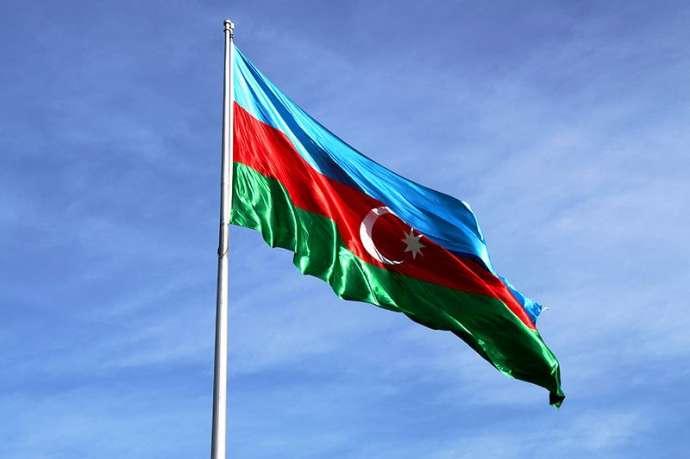
The restoration of independence was also accompanied by the revival and formal adoption of national symbols. In May 1992, the Milli Majlis approved Azerbaijan’s national anthem, with music by Uzeyir Hajibeyov and lyrics by Ahmad Javad. The tricolor flag and the state emblem featuring an eight-pointed star with a flame at its centre were also officially adopted.
These symbols became powerful expressions of national identity and the continuity of Azerbaijani statehood. In particular, the tricolor flag linked the modern republic to the Azerbaijan Democratic Republic, providing a visible reminder of the historical foundations upon which independence had been restored.
The events of 1991 and the subsequent adoption of state symbols thus represented interconnected stages in the consolidation of Azerbaijan as an independent state.
Two Dates, One Historical Continuity
The distinction between May 28 and October 18 is essential to understanding Azerbaijan’s national history. While May 28 commemorates the original proclamation of independence in 1918, October 18 marks its restoration in 1991. Together, the two dates reflect different but inseparable chapters in the country’s experience of statehood.
This distinction was formally clarified in 2021. On October 15 of that year, the Milli Majlis adopted the Law “On Independence Day,” which was signed by President Ilham Aliyev on the same day. Under the legislation, May 28 was designated Independence Day, while October 18 was renamed Restoration of Independence Day, replacing its previous designation as State Independence Day.
The change underscored the historical relationship between the first Azerbaijani Republic and the modern state. It also gave each date a clearly defined place in the national calendar, distinguishing the initial establishment of independence from its restoration after decades of Soviet rule.
Today, October 18 is observed annually in Azerbaijan as a national holiday and a working day, reflecting its official significance in the country’s historical and civic life.
Independence as a Foundation for the Future
The restoration of independence in 1991 opened a new chapter in Azerbaijan’s development, providing the country with the opportunity to determine its own political course, establish independent state institutions and pursue its foreign relations as a sovereign state. The path that followed was complex, marked by political and economic challenges as well as armed conflict over Karabakh region of Azerbaijan. These circumstances formed an important part of the early experience of the restored Republic.
Against this background, October 18 serves not only as a commemoration of a historic legal act but also as a reminder of the responsibilities and aspirations associated with sovereignty. It highlights the importance of preserving national identity, maintaining statehood and understanding contemporary Azerbaijan within the broader context of its historical experience.
Ultimately, October 18 represents the continuity of Azerbaijani statehood and the enduring significance of independence in the country’s national history. By linking the Azerbaijan Democratic Republic of 1918 with the restoration of sovereignty in 1991, the date highlights a historical legacy that continues to shape modern Azerbaijan.
Each year, Restoration of Independence Day offers an opportunity to reflect on this legacy and the historic decision that enabled Azerbaijan to resume its development as an independent state.



 comment replay












 الرجاء الانتظار ...