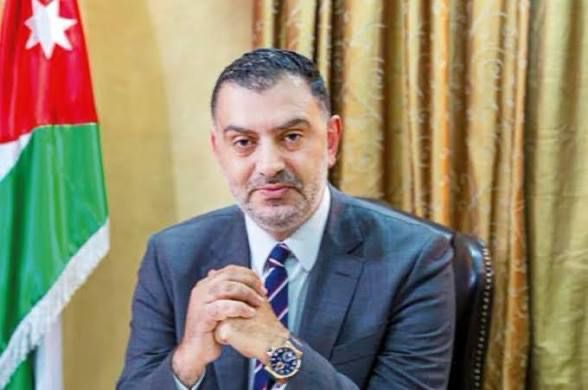
Nidal F. El Batayneh
This is the ultimate question to be asked before anyone asks “where is the King “, they should ask: by what alchemy has Jordan endured?
Not merely survived — endured, upright, in a region that has been merciless to nearly everyone in it. How does a nation of modest means, without the cushion of oil wealth or the shield of a fortunate map, hold its composure while neighbors with greater resources and better geography come apart at the seams? Armies have disbanded. Institutions have hollowed out. Regimes have dissolved into rubble, and capitals once thought permanent became battlegrounds.
Through the invasion of Iraq, the Syrian catastrophe, successive tides of displacement, terrorism, energy shocks, economic contraction, a global pandemic, the war in Gaza, and a region perpetually on the verge of wider escalation — how did Jordan's institutions, its army, its borders, and its very statehood remain intact, even formidable?
And here is the sharper question still: how did Jordan accomplish this inside a labyrinth of international and regional calculation — a world stitched together by interests, alliances, quiet understandings, and bargains, some declared in public, others never uttered before a camera?
To sit with these questions is to expose the shallowness of "Where is the King?" — a question with obvious media appeal, tailor-made to flatter a certain breed of critic, yet resting on a fundamentally juvenile premise: that absence from the screen equals absence from power, that travel means abandonment, and that entrusting a young Crown Prince with public responsibility — in a country whose population is overwhelmingly young — must signal that leadership itself is receding.
What appeared in a magazine that fancies itself a serious outlet for political analysis was not analysis at all — it was a conflation of visibility with governance. The King is not a broadcast anchor, and Jordan is not a television studio awaiting his cue. Statecraft happens as much behind closed doors as it does before an audience; it lives in phone calls, treaties, and quiet alliances as much as in speeches.
For a country like Jordan, diplomacy is not an indulgence — it is a mechanism of self-preservation. We are not a superpower capable of dictating terms by force. We are not an oil monarchy that can simply purchase its own security. We are not an island able to retreat from its surroundings. We are a small state wedged at the crossroads of colliding empires, and so our dealings with Washington, Beijing, Brussels, and the wider Arab world are not exercises in sloganeering — they are the careful stewardship of a nation's interests amid a storm with no clear horizon.
Critics are entitled to question these relationships, even to demand they be reconsidered. But collapsing them into the formula "closeness to Washington equals Jordanian weakness" isn't critique — it's a threadbare oversimplification masquerading as insight.
And to any publication that markets itself as a serious voice in political commentary: Jordan cannot be assembled from a stack of headlines — unemployment, Gaza, Iran, America, the Muslim Brotherhood, foreign travel, military posture — with a single underlined conclusion scrawled beneath them: "Where is the King?" Beneath all of it lies history, geography, a living society, the enduring weight of the Palestinian cause, an army, functioning institutions, a fragile but resilient economy, collective memory, and an intricate lattice of internal and regional equilibrium. This is not a chess match sketched on a napkin. It is a nation working, deliberately, to endure — and it will endure, sustained by the shrewdness of its leadership and the loyalty of its people.
None of this suggests Jordan is beyond reproach, or that its choices are immune to scrutiny. Certain decisions may well merit real accountability and rigorous examination. But genuine critique does not begin by tallying a monarch's television appearances. It begins with a far more demanding question:
What, exactly, allowed Jordan to persist?
What did it concede, and what did it refuse to concede? What price did that refusal exact? What alternatives even existed? And how did it slip past the fate that swallowed states with vastly greater resources at their disposal? A nation that emerged intact from such wreckage deserves to be understood before it is put on trial.
In the end, leadership cannot be reduced to a camera lens, a state is not a talk-show segment, and history has never measured a country's relevance by how often its leader shows his face.
May Jordan be preserved — its land, its identity, its people, and its leadership — guarded by the resolve of its armed forces and the vigilance of its security institutions.
May Allah Bless the Jordanians, our King and Armed Forces.
Elbatayneh.nedal@gmail.com



 comment replay








 الرجاء الانتظار ...