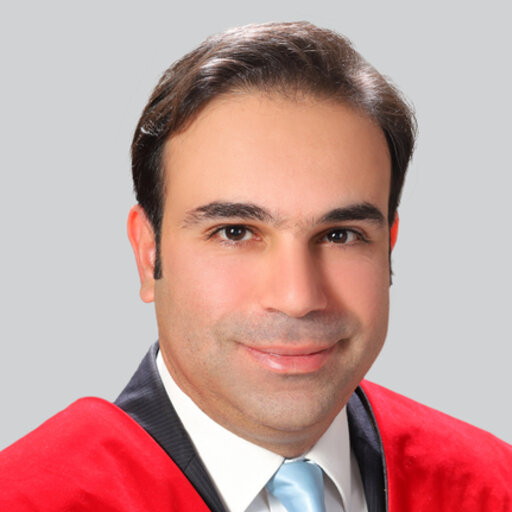
Raad Mahmoud Al-Tal
In Beirut, the Union of Arab Banks organized the Arab Conference on Combating Money Laundering. The conference brought together officials, experts, bankers, and representatives of financial and regulatory institutions. It was held at an important time, as financial crimes are becoming more complex and technology is changing the way money moves around the world.
The conference raised an important question: Can we fight money laundering effectively without improving the economic and institutional environment that allows illegal money to move and grow?
From an economic point of view, money laundering is not only a financial or legal problem. It is also linked to weaknesses in the economy and in institutions. Illegal money looks for economies where informal activities are large, governance is weak, and financial systems are unable to properly track money flows. Therefore, fighting money laundering should start before illegal money enters the banking system. It should start by building a stronger, more stable, and more transparent economy.
Economic stability is one of the most important protections against financial crime. When fiscal and monetary policies are sound, public debt is sustainable, and prices are stable, uncertainty falls and confidence in institutions increases. On the other hand, long-lasting economic problems can increase the informal economy and create more opportunities for financial crime.
One important reform is to reduce the size of the informal economy and bring more businesses into the formal economy. This cannot be achieved through penalties alone. Governments need to make it easier and more attractive for businesses to operate legally. This can be done by simplifying procedures, improving the tax system, reducing the cost of doing business, and helping small and medium-sized businesses enter the formal economy. When more economic activity becomes formal, financial transactions become easier to monitor and understand.
Financial inclusion is another important part of the solution. When more people and businesses use bank accounts, electronic payments, and digital wallets, the economy becomes less dependent on cash. At the same time, banks and regulators can better track financial transactions. This means that financial inclusion is not only a social policy. It is also an important economic and financial tool for improving transparency and reducing the space available for illegal money.
The banking sector also needs to change the way it manages financial risks. Traditional compliance is no longer enough. Banks need to focus more on risk-based supervision. This means giving greater attention to transactions, activities, and customers that present higher risks. Strong corporate governance is also essential. Effective boards, strong audit committees, and independent compliance and risk management functions can help protect financial institutions from serious risks.
Technology is becoming another important tool in this fight. Artificial intelligence and big data can help banks analyze large amounts of information and identify unusual financial transactions. This allows banks to move from simply reacting to problems to identifying risks before they become serious. However, technology alone is not enough. Banks also need skilled employees who understand economics, finance, regulation, and digital technology. Investment in people and training is therefore just as important as investment in technology.
In simple terms, banking integrity depends on three things: a stable economy, strong and well-governed banks, and smart technology that helps identify financial risks. These three elements must work together. Weakness in any one of them can weaken the entire financial system.
The main message from the Arab Conference on Combating Money Laundering in Beirut is clear. Fighting money laundering should not be seen as a cost imposed on banks. It should be seen as a long-term economic investment. A transparent and trustworthy financial system increases confidence, lowers financing costs, improves the investment environment, and supports economic growth.
Integrity is therefore more than an ethical principle. It is an economic asset. Investment in transparency, governance, technology, supervision, and human skills is an investment in economic stability and sustainable growth.
The strongest way to fight money laundering is not through punishment alone. It is through building an economy where illegal money cannot easily find a place to grow, institutions that people and investors can trust, and banks that can identify financial risks before they become major problems. Economic reform, strong institutions, and a transparent banking system are not separate goals. Together, they are the foundation of a stronger and more resilient economy.



 comment replay












 الرجاء الانتظار ...