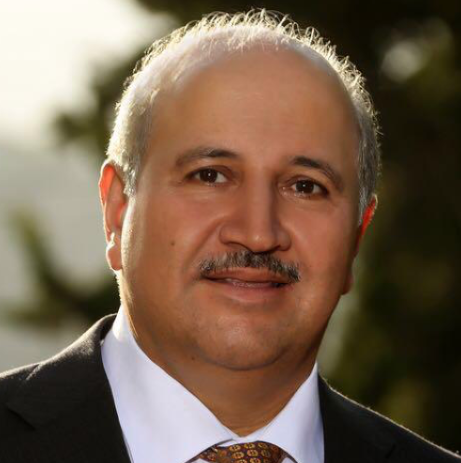
Dr. Hazim El-Naser
Large-scale projects or megaprojects are defined not only by their cost, scale, or technical complexity, but also by the breadth of their long-term economic, social, and environmental impacts. They typically require sustained public and private investment, coordination across multiple institutions, and careful management over extended time horizons. Because of their strategic significance, such projects frequently attract the attention of governments, investors, media, and development partners, while also carrying implications that extend well beyond the sectors in which they originate. Large-Scale Projects have become important element of Jordan’s Economic Modernization Vision (EMV), promoting economic growth, regional connectivity, and long-term sustainability
Jordan has already demonstrated the ability to develop and sustain major projects despite financial and structural constraints. Examples, such as the Disi-Amman Water Conveyance Project, the Aqaba Special Economic Zone, As Samra Wastewater Treatment Plant, the Arab Potash Company, the Jordan Phosphate Company, and many major electricity generation investments, show that large-scale initiatives can support national development when they are linked to clear strategic needs. More recent efforts, including the National Water Conveyance project, reflect the growing importance of long-term infrastructure planning in a country facing increasing pressure on water, energy, and urban systems, because of population growth and regional geopolitics.
When planned well, large-scale projects do more than create infrastructure. They can improve service delivery, expand productive capacity, attract investment, strengthen supply chains, and deepen regional connectivity. In Jordan’s case, this is especially important because critical sectors such as water, energy, transport, logistics, and urban development directly affect both economic stability and daily life. A project such as the National Water Conveyance project, is not simply a technical intervention; it is part of a broader national strategy for water security, climate action, and long-term resilience. Research on megaprojects consistently shows that these ventures are transformative, but also difficult to manage because of their scale, stakeholder complexity, and exposure to risk.
The current regional environment creates a practical opening for Jordan to think more ambitiously about cross-border and nationally significant projects. Shifts in regional trade, infrastructure investment, energy transition, and water security are generating demand for better-connected systems across the Middle East. Jordan is well positioned to benefit if it can move beyond reacting to opportunities and instead build a stronger pipeline of well-developed projects. This requires institutional capacity to generate concepts, test feasibility, coordinate donors and stakeholders, and prepare bankable proposals in sectors such as water, electricity, transport, logistics, and new urban development. It’s worth to mention, in this regard, the Turkyie and Kingdom of Saudi Arabia signed landmark agreement for a new railway line connecting the regional countries, to act as an overland trade route bypassing the Strait of Hormuz, with all associated sub-projects that will definitely have positive socioeconomic impact for our citizens.
At the same time, large-scale projects carry serious risks. International experience shows that cost overruns, delays, weak coordination, unrealistic assumptions, and environmental pressures are common in megaproject delivery. Successful projects therefore depend on more than political ambition. They require disciplined project preparation, realistic financial planning, strong procurement and contract management, transparent governance, risk assessment, and continuous stakeholder engagement. For Jordan, building these capabilities is just as important as securing funding. Without them, even strategically sound projects can underperform or lose public confidence.
One of Jordan’s upcoming important steps is to strengthen the institutional machinery behind project identification and preparation. A specialized national platform, fund, or task force focused on major strategic projects could help translate national priorities into implementable initiatives. Its role would not be limited to technical drafting. It should also support scenario analysis, partnership design, sequencing, financing options, and coordination across ministries and investors. Such a mechanism would help Jordan move from unilateral sector project development toward a more strategic model in which large-scale investments are selected, shaped, and managed according to long-term national objectives of the EMV.
Dr. Hazim El-Naser, former Minister of Water, Irrigation and Agriculture, and international water expert



 comment replay











 الرجاء الانتظار ...