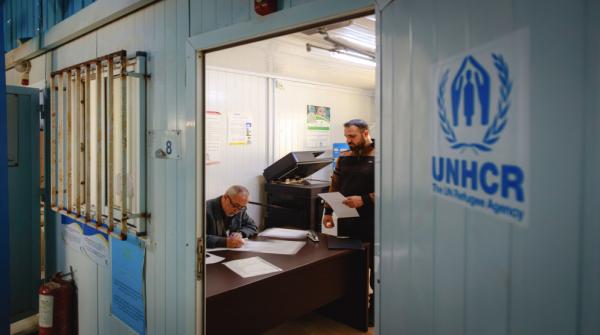
Ammon News - Total funding recorded for the United Nations High Commissioner for Refugees (UNHCR) operations in Jordan during the first half of 2026 reached $77.7 million, covering only about 28% of overall funding requirements. The funding gap stood at approximately $202.3 million, representing 72.25% of total needs as of June 30, 2026.
UNHCR spokesperson Yousef Taha said the available funding remains significantly below the level required to sustain the agency's operations in Jordan. Despite the shortfall, UNHCR continues to provide cash assistance to refugees and vulnerable families, while also supporting host communities.
He added that during the second quarter of 2026, UNHCR provided cash assistance for basic needs to nearly 10,000 refugee families living across Jordan's governorates.
Taha noted that 7,277 refugees had benefited by the end of May from the voluntary return cash assistance program in the Zaatari and Azraq camps. The assistance includes JD210 per family, plus an additional JD70 per person for the most vulnerable households.
Post-distribution monitoring showed an 89% satisfaction rate, with most assistance used to cover food, transportation, and debt repayment costs. Additionally, 270 refugee families earned nearly $300,000 from the sale of 530 caravans in Zaatari camp before returning to Syria.
Regarding voluntary returns, Taha said that more than 203,500 registered Syrian refugees returned to Syria between December 8, 2024, and June 30, 2026. The figure rose to more than 208,000 returnees by July 18, 2026.
He added that return numbers increased in recent months, with around 5,000 returns recorded in May and nearly 6,900 returns in June.
According to the regional update on Syrian returns for April and May 2026, current return rates average between 1,000 and 1,300 individuals per week, significantly lower than the average of 3,000 weekly returns recorded during 2025.



 comment replay










 الرجاء الانتظار ...