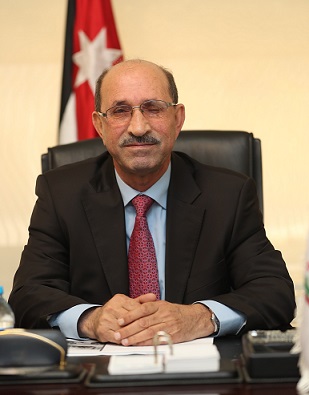
Dr. Hamed Kasasbeh
Jordan faces increasing pressure on its public budget due to rising current expenditures and the shrinking fiscal space available for capital investment. This situation has limited the economy’s ability to support growth and generate new jobs. It highlights the need to modernize the budgeting approach so that resources are directed toward productive investment rather than merely covering operational obligations.
A review of the spending structure shows that combining current and capital expenditures within a single budget places investment projects at a disadvantage compared to fixed obligations. Additionally, the mechanisms for selecting projects still lack independent economic evaluation capable of determining true feasibility and developmental impact. This creates a strong need for adopting a unified evaluation framework that assesses project readiness, economic and social returns, job creation potential, and geographic equity.
Based on this, functional separation between the two types of spending becomes essential through the creation of a national capital budget managed by a specialized unit, operating separately from the current budget. In this model, the current budget remains fully under the Ministry of Finance, responsible for fiscal policy, treasury management, and public debt. Meanwhile, the proposed national unit—established by reorganizing existing functions rather than creating a new independent agency—would handle the planning, evaluation, and monitoring of capital projects and submit recommendations directly to the Cabinet. With this structure, the selection and prioritization of national projects become a direct responsibility of the Cabinet, ensuring greater policy consistency, unified decision-making, and stronger executive backing for major projects. Furthermore, this arrangement ensures that when borrowing is used to finance capital projects, debt flows toward productive investments, not operational spending—thereby increasing the productivity of public debt and enhancing its developmental impact. A medium-term expenditure framework can also be used to ensure stable financing for major projects over several years.
International experiences reinforce the importance of such an approach. Countries such as the United States, South Korea, New Zealand, the United Kingdom, and the United Arab Emirates clearly differentiate between current and capital spending through specialized public investment units. These models show that dedicated technical entities improve project selection, align investment with national priorities, and strengthen transparency through medium-term plans and regular performance reports.
In Jordan’s context, the proposal does not aim to create new bureaucratic structures but rather to address existing fragmentation in project management across several ministries and agencies. The suggested model consolidates scattered functions into a single national unit linked to the Cabinet, allowing for better planning, follow-up, and accountability—without increasing the size of the government. Public, quarterly progress reports would further enhance transparency, reduce waste, and strengthen public trust.
The model also improves the efficiency of public–private partnership (PPP) projects by enhancing feasibility assessments, improving risk evaluation, and ensuring alignment between priority projects and available financing. This transforms PPPs from a mere alternative financing mechanism into a strategic development tool that boosts productivity and supports job creation.
This organizational reform aligns directly with Jordan’s Economic Modernization Vision 2033, as separating the two budgets enables clearer direction of investment toward priority sectors such as technology, energy, tourism, and logistics. It also reduces institutional fragmentation that slows down the implementation of major national projects and enhances the government’s ability to execute long-term development programs.
Success, however, depends on creating clear tools for measuring project impact—such as contributions to growth, employment, productivity, and reducing regional disparities. Through such an approach, resources can be redirected toward projects with the highest value added, while moving away from traditional, low-impact spending patterns.
In conclusion, establishing two separate budgets—a current budget managed by the Ministry of Finance and a capital budget managed through a national unit reporting to the Cabinet—is a major step toward redefining the role of the public budget as a tool for development. Importantly, this separation does not diminish the Ministry of Finance’s sovereign role in fiscal policy, treasury management, and debt oversight; rather, it strengthens it by allowing the Ministry to focus on macro-fiscal stability while the specialized unit enhances the efficiency and impact of public investment. When investment decisions are based on clear economic analysis, public spending becomes more productive and development pathways become more coherent and sustainable.



 comment replay












 الرجاء الانتظار ...