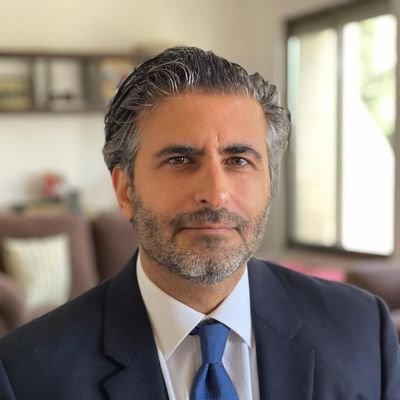
Dr. Amer Al Sabaileh
In recent weeks, Suwayda has emerged as the most prominent headline in the Syrian and regional landscape. It has even become one of the main gateways for Syrian–Israeli contact, with Israel stepping directly into the Syrian conflict and openly declaring its support for the Druze community.
The move toward direct talks between Syrian Foreign Minister Asaad al-Shaybani and an Israeli delegation in Paris may be seen as a qualitative development and the outcome of recent dynamics. Yet, it is not unprecedented, but rather part of recurring rounds of dialogue held under various auspices, whether in Geneva or Baku.
The Paris meeting carried a public façade focused on de-escalation, non-interference in Syrian affairs, and agreements aimed at supporting regional stability. These included a ceasefire in Suwayda province and the reactivation of the 1974 disengagement agreement. However, the real substance of the talks went far beyond these declared themes, addressing issues of much greater sensitivity to Israel: the gradual redeployment of Israeli forces along the Golan Heights, intelligence-sharing on jihadist networks still active in southern Syria, and even joint security considerations for containing Iran-backed Shiite militias in the Daraa region.
All of this unfolded under U.S. sponsorship, providing both the negotiating framework and future guarantees, including the prospect of creating a trilateral monitoring mechanism (the United States, Israel, and Syria) under UN auspices. Such an arrangement would allow Washington to maintain a privileged grip on the evolving scene, while curbing the growing influence of other regional players, particularly Iran and Russia.
Despite its diplomatic façade, Israel’s interest appeared far more practical. The delegation, led by Strategic Affairs Minister Ron Dermer—Prime Minister Benjamin Netanyahu’s trusted adviser—also included experts from Mossad and Aman (military intelligence), carrying detailed files on border smuggling and the Druze issue. Israel came to the negotiating table this time after its latest military operation in Suwayda, which halted a government offensive and granted local Druze a form of actual control over the province.
Against this backdrop, another meeting stood out: between Sheikh Mowafaq Tarif, the spiritual leader of Israel’s Druze community, and former U.S. President Donald Trump’s envoy to Syria, Tom Barak. Their talks focused on the potential establishment of a direct humanitarian corridor between Israel and Suwayda, alongside logistical arrangements, supply channels, and possible international support.
Achieving this would represent a decisive break from Damascus’s official position, which insists that all aid must pass exclusively through state institutions. Moreover, it could encourage other Syrian communities to seek regional or international alliances that secure political gains and a role in the emerging Syrian map.
Damascus, meanwhile, remains ambiguous. It continues to reject direct dialogue with local Druze leaders yet shows readiness to discuss the matter as a whole with Israel and the United States. This signals a bid to regain international legitimacy and re-enter the diplomatic arena. For the regime, the issue is tied to reinforcing central authority, which explains why the overriding geopolitical priority remains the consolidation of internal power.
This duality within the Syrian administration is striking. On one hand, the Foreign Ministry pushes for a pragmatic approach, projecting an image of engagement with international expectations through humanitarian openings or limited concessions. On the other, the security apparatus on the ground holds firm to a hardline stance, rejecting any opening that could lead to autonomy for Suwayda and the Druze. This explains the contradictory signals emanating from Damascus in recent weeks.
Ultimately, the Suwayda issue is part of a wider scene of fragile balances, opaque negotiations, and unwritten understandings, where official positions diverge widely from actual dynamics. Damascus’ public acknowledgment of the Paris meeting itself marks a shift in pace, intended to send signals both to the international community and to domestic actors alike.



 comment replay










 الرجاء الانتظار ...