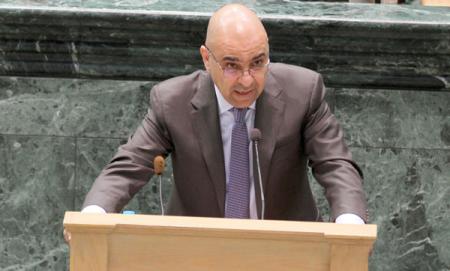
Raad Mahmoud Al-Tal
Recent economic figures in Jordan show a relative improvement in several macroeconomic indicators, providing a foundation to assess the country’s economic direction.
The current account deficit fell to about 4.5% of GDP in 2024, its lowest level since 2019. This reflects an improved external balance and reduces reliance on external financing, a factor linked to lower risk and higher investor confidence.
GDP grew by around 2.5% the same year, indicating moderate but steady economic activity. Inflation stabilized at about 2%, creating a predictable price environment and easing pressures on monetary policy. Foreign reserves rose to nearly USD 22 billion, enhancing the Central Bank’s capacity to manage potential currency fluctuations.
The question now is how to translate these improvements into sustainable growth. Macroeconomic stability alone is insufficient to achieve higher growth or generate enough jobs. Structural reforms remain crucial to boost productivity and strengthen sector competitiveness. Key areas include industry, agriculture, and logistics, which are central to building a resilient productive base.
The business environment is also critical. Simplifying procedures and reducing bureaucracy can lower costs for investors, while targeted incentives can support high value-added sectors. Diversifying exports and accessing new markets are essential for trade stability, particularly amid ongoing regional geopolitical shifts.
On the fiscal side, the narrower current account deficit allows more room for capital spending on development. Investments in renewable energy, transport infrastructure, and industrial zones can enhance competitiveness. Long-term investments in education, technology, and innovation remain central to creating jobs and raising economic value-added.
Overall, the indicators point to a modest improvement in Jordan’s macroeconomic environment, but they also underline the continuing need for structural reforms to ensure sustainable growth and strengthen productive sectors as pillars of the economy.
Raad Mahmoud Al-Tal is head of the Economics Department – The University of Jordan -
r.tal@ju.edu.jo


 comment replay










 الرجاء الانتظار ...