Ammon News - By Hani Hazaimeh
AMMAN - An international study of government accountability, issued on Tuesday, claimed that Jordan’s national anti-corruption framework during the past few years has produced timid monitoring agencies and limited results.
The report, released by Global Integrity, an award-winning international nonprofit organisation that tracks governance and corruption trends globally, was criticised by the government, which said that some data included in the report were based on inaccurate information.
"Critics point to the government’s recent removal of the head of the Jordanian Audit Bureau as an explanation for these agencies’ unwillingness to assert themselves," said the report.
But Minister of State for Media Affairs and Communications and Government Spokesperson Nabil Sharif told The Jordan Times on Thursday that this case took place two years ago, and wondered why it was brought up in this year's report.
With regards to the public's right of access to information, Sharif said ‘Jordan is the only Arab country that has a law guaranteeing this right’, adding that this should have been highlighted in the report in favour of the country and not against it.
The NGO claimed that despite a new access to information law being in place, in practice, Jordanian citizens' access to key documents, such as asset disclosure forms for government officials, financial records of state-owned companies, and reports from both the Anti-Corruption Commission and the Ombudsman’s Office, remains limited.
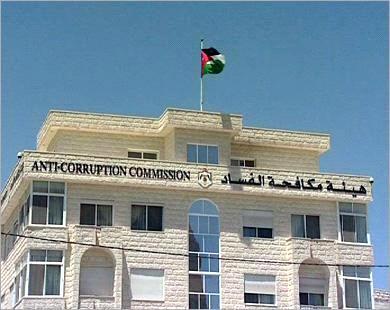
The study added that the Ombudsman’s Office, which was established in 2008, has only taken on low-level cases while the newly created Anti-Corruption Commission has been slow to act or issue reports.
"… The Jordanian Foundation for Investment, the oversight agency for state-owned enterprises, was abolished in favour of a ministerial-level monitoring body which adheres to less transparent oversight practices," the study, an investigative report covering 35 countries, said, alleging that citizens are unlikely to turn to the courts to appeal their right to access these documents due to long delays in the appeals process and the high costs involved.
“As the newly appointed prime minister, Samir Rifai, announces an aggressive campaign against corruption, it is vital for the government to take concrete action that goes beyond political rhetoric. Otherwise, the critics who say the new drive against corruption is just a popularity stunt will be right,” said Global Integrity Managing Director Nathaniel Heller.
The Global Integrity Report: 2009 covers developed countries such as the United States and South Korea as well as dozens of the world’s emerging markets and developing nations, from Azerbaijan and China to Lebanon and Vietnam.
The document assesses the accountability mechanisms and transparency measures in place (or not) to determine where corruption is more likely to occur. According to authors, the report is based on the assessment of more than 300 specific “Integrity Indicators” and includes journalistic pieces covering corruption cases.
(Jordan Times)



 comment replay












 الرجاء الانتظار ...