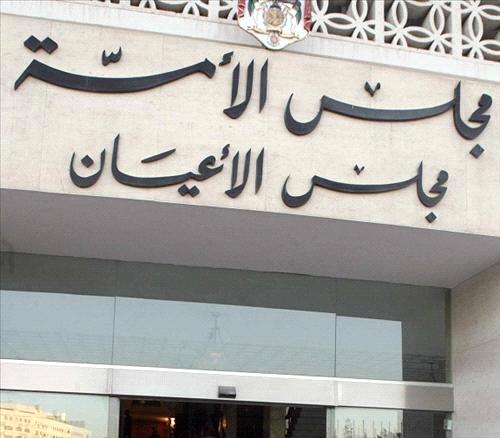
Ammon News - AMMONNEWS - The Lower House on Sunday endorsed a provision in the draft political parties law banning parties from promoting their platforms to members of the military or judiciary.
During Sunday’s session, the first since the Parliament had its second ordinary session extended, deputies voted in favour of Paragraph G of Article 19 of the bill as phrased by the former government and approved by the Legal Committee.
Under the article, political parties are prohibited from organising propaganda activities among military, security, or civil defence forces or judges.
Amman MP Khalil Atiyyeh proposed an amendment to ban diplomats from joining political parties, arguing that Egypt and Tunisia do so, but the proposal was voted down.
Irbid Deputy Jamil Nimri argued that all democratic countries allow their diplomats to join political parties, noting that in many states foreign ministers are members of the ruling party.
"Such a provision is not in the Egyptian and Tunisian laws," Nimri charged, addressing Atiyyeh. "The former Egyptian ambassador in Amman was a member of the National Democratic Party."
In addition, MPs voted to approve Article 23 of the draft law, which regulates political parties' activities, as phrased by the former government and endorsed by the Legal Committee, despite calls by some deputies to revisit the provision.
Under Paragraph A of the article in question, political parties can use the facilities of social and cultural centres, professional association headquarters and sports clubs to hold various activities, provided that they obtain prior approval.
Maan Deputy Khalid Fanatseh proposed that political parties be required to inform district governors ahead of any such event so that they can ensure their security.
"I myself belong to a political party and I am not against the freedom of partisan life, but informing authorities ahead of time about the time and place of their meetings can ensure political parties’ protection," Fanatseh said.
Prime Minister Fayez Tarawneh, who attended the session, described Fanatseh's proposal as "to the point", also citing security concerns.
Irbid Deputy Hosni Shayab went further, demanding that political parties obtain the approval of a minister before organising any event.
In response, Amman Deputy Abla Abu Olbeh, rapporteur of the joint panel which examined the 38-article bill, explained that Fanatseh's and Shayab's proposals would contradict the House's amendments to the Public Gathering Law, which annulled the item requiring protesters and political parties to obtain approval from the interior ministry for rallies.
At the beginning of the session, House Speaker Abdul Karim Dughmi read the Royal Decree that extended the Parliament's second ordinary session to June 26.
Tarawneh pledged that his government would "wholehearted" cooperation and constant coordination with deputies to serve the country's interests.
Also yesterday, 10 deputies submitted a memorandum to the House speaker's office, requesting that Article 4 of the draft political parties law, which was endorsed previously by MPs, be revisited.
On April 17, a majority of deputies voted in favour of a proposed amendment to Paragraph B of Article 4 presented by MP Mamdouh Abbadi (Amman, 3rd District), to prohibit the establishment of political parties on a religious, ethnic, racial or regional basis.
Another 24 MPs submitted a second memorandum accusing the government of raising the prices of basic commodities.
Signatories of the memorandum, a copy of which was made available to The Jordan Times, called on the government to find other alternatives to address the Kingdom’s economic troubles instead of resorting to "citizens' pockets".
Dughmi is scheduled to hold a press conference today in which he will talk about the House's achievements and its vision of the reform process, as well as several local and regional issues.
* Jordan Times / By Raed Omari



 comment replay











 الرجاء الانتظار ...