Ammon News - AMMONNEWS - some 44 parliament members signed a memorandum to vote no confidence in the Minister of Energy and Mineral Resources Qutibah Abu Qurah over government's decision to raise electricity prices.
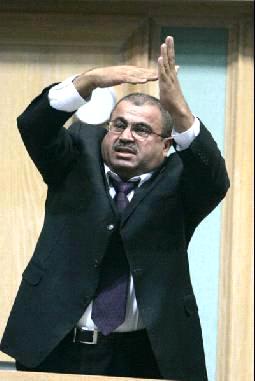
During the Tuesday's parliamentary ordinary session some MPs accused Abu Qurah of "misleading" the House and lake of explanations about rising the prices.
They demanded the government to explore alternative energy source to ease the Kingdom’s reliance on Egyptian gas by alternative energy markets, including the import of liquid gas from Iran, in order to avoid future rises in electricity prices.
The minister stated in respond of MPs anger that Jordan's energy bill rose to more than half in 2011 due to a rise in oil prices and the increasing dependence on heavy oil to generate electricity, and the rise in electricity tariffs related to the ongoing unreliability of Egyptian gas supplies, the Kingdom’s main energy source.
The Kingdom's imports of oil derivatives and electricity last year stood at JD3.723 billion compared to JD2.430 billion in 2010, according to Department of Statistics (DoS) figures.
The Kingdom's imports of oil and electric energy accounted for 28.7 percent of the total imports which amounted to JD12.990 billion.
Jordan's imports of crude oil reached JD1.764 billion in 2011 compared to JD1.357 billion in 2010.
The government unveiled a new electricity tariff that will leave some customers paying over 500 fils per kilowatt-hour (kWh).
The new tariff, which raises electricity bills by an average of 9 per cent and goes into effect this month, relies on a progressive pricing scale, dividing households into 12 brackets.
Under the new pricing system, published in the Official Gazette last week, consumers who use 600kWh or less of electricity per month — some 89 per cent of households in the Kingdom — will be charged the same 72-113 fils per kWh rates that was in effect previously.



 comment replay












 الرجاء الانتظار ...