By Abdulilah
In reading the many articles on this issue and the latest commentary by Dr, Amer Al-Sabaileh in Ammon News titled “The contradiction between slogans and actions” I was intrigued enough to attempt to understand how in the world we got this law and what can we do to either get this law repealed or accept it as it stands.
Now please understand, I am not yet advocating this law stand as written, nor am I advocating for its repeal. I was hoping to understand like the majority of the people why Parliament (lower house) would enact such a law and why the Committee to Protect Journalists, here-in referred to as the CPJ is angry and frightened of this law.
Now please do not think me naïve here, as I can understand the views of the GPJ and on the face of it without transparency prevalent in parliament these days why this law was even required and the fear it invokes amongst Journalists and the people at large, especially at this time of the so called “Arab Spring” or as Dr. Al-Sabaileh states in his commentary in this very forum “hackneyed slogan bandied about is “the sky’s the limit for freedom” where as he clearly is peeved by the what he believes as the back-peddling away of this principal by the same people who spoke these slogans (i.e. the elected officials of the lower house of parliament).
So what is this law about? What does it state? Is it fair? Is it necessary? Or was it put into affect because The Lower House of Parliament officials by a majority of 56 -40 was using this law to intimidate the CPJ and the public at large. I hope by writing this I may understand this issue better and hopefully you the ordinary citizen as well. Please feel free to correct me where I have clearly made a mistake in my logic and research of this most important subject especially when it means the possibility that it might muzzle our freedoms of expression.
So what is this law about and what does it state? According to Ammon News and other CPJ membership papers “On September 27, the chamber of deputies passed the draft law, which would allow fines for public accusations of corruption "without solid facts" of between 30,000 and 60,000 Jordanian dinars (US$42,000 to US$84,600) but failed to elaborate on what would constitute "solid facts," local and international news outlets reported. Article 23 of the draft law says the fines would be levied on "every person or party that publicly or explicitly attaches charges of corruption to others without solid facts with the purposes of extortion, slander or defamation and character assassination,"
Is this law fair and necessary as written? This a hard question to answer without some background. A paper was written on this very subject back in February of 2005 prepared by Professor Keith Henderson-, BA,JD,LLM for the UNDP/OECD called “Good Governance for Development in the Arab Countries” Regional Conference held here in the Dead Sea, Jordan.. Professor Henderson at that time was the Sr., Rule of law Advisor and Anticorruption Fellow at IFES “The main objective of this paper was to encourage an open debate and reform action in the middle-east and North Africa…. on the need to the legal and political enabling environment necessary to promote good governance, the Rule of Law and citizen participation”.
The paper noted “that many of the defamation laws in the region still contain criminal penalties, including high fines and imprisonment, and that the threat of enforcement of these laws and policies leads to government censorship, self censorship and sometimes imprisonment”.
It continues by stating that “these practices are now well understood as counter to international obligations and best practices as well as a guarantee of a free media and free speech” where these guarantees are “enshrined” in most if not all the Arab governments constitutions as I believe they are in Jordan’s own constitution (someone please correct me if I am wrong here).
This paper continues, rightly so, to advocate that the net result of the type of defamation laws and practices produces a “culture of secrecy that presents high barriers to sustainable economic and political reform”, and that “collectively, this secrecy effectively muzzles open discussions and critical reform debate and makes the promotion of basic human rights and a good governance reform agenda virtually impossible”.
This paper continues by advocating that a good “first step” would be a regional reform strategy that “might include the decriminalization of defamation insult laws --particularly as they relate to journalists and the media”. It argues that the “media is the main source of public information … and one of the primary means for citizens to participate in the ensuing reform debate.” It advocates for the leadership to place these types of laws on the “backburner” and that “such a move would send up a signal to citizens …. that could alter the way citizens and government officials currently interact and relate to each other. Then, public private reform partnerships on a broad array of issues may begin to engage out of the atmosphere of secrecy that permeate much of the region”
It states clearly that “defamation” as it pertains to legal terminology across regions as “libel, slander, defamation and insult laws, … have been used, in various ways and degrees to stifle the press and inhibit criticism of government officials and government decisions.
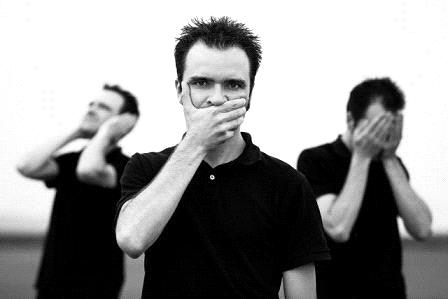
Consequently, journalists critical to government officials or government decisions often speak or write under the veiled real threat of criminal prosecution and punitive fines.” The net affect it argues will be self censorship and a general in-ability for most to have a meaningful voice in any democratic governance debate or reform initiative.” It argues, and rightly so, that the best practice is abolishing and decriminalization of any of these “defamation laws”. And that this best practice of decriminalization “is grounded on the notion that the fundamental rights and societal benefits of a free press generally outweigh any other rights or special privileges of the State, and that criminal sanctions for defamation is not proportionate to the violation incurred.
Like other restrictions on the right to freedom of expression, the imposition of sanctions for defamation must: (i) correspond to a pressing social need, (ii) be proportionate to the harm suffered and (iii) be strictly necessary in the particular circumstances.” Professor Henderson rightly so advocates that “that a particular sanction will not be regarded as necessary if it is disproportionate to the harm done, in this case to reputation” meaning the reputation of the government official being “defamed”.
He quotes the Universal Declaration of Human Rights (UDHR) and the international Covenant on Civil and Political Rights (ICCPR) that was adopted by the UN and is “binding on all States as a matter of customary international law”. Where “Article 19 of the Declaration provides:
“Everyone has the right to freedom of opinion and expression, this right includes freedom to hold opinions without interference and to seek, receive and impart information and ideas through any media and regardless of frontiers”
In this same paper (I am sorry to quite so much here but it is quite clear and compelling) that the International Covenant on Civil Political Rights Acceptable Restrictions to Free Speech are as follows:
1.Restrictions must be “prescribed by law”, meaning they must be enshrined in the legal framework. In order to meet this requirement, a restriction must be “adequately accessible” and foreseeable, that is “formulated with sufficient precision to enable the citizen to regulate his conduct”. The restriction, however does not need to be codified, it is sufficient if it is “reasonable foreseeable” from case law.
2.Restrictions must be “necessary”. To meet the necessity threshold, a restriction does not have to be “indispensable” but it must be more than merely “reasonable” or “desirable” “A” “a pressing social need” must be demonstrated, the restriction must be proportionate to the legitimate aim pursued, and the reason given to justify the restriction must be relevant and sufficient.”
OK now taking all the above in consideration, would anyone state that the law enacted above by the Lower House of Parliament meets this criteria or reform? If you state yes than you have not been reading the same material as I have or as articulated above by Professor Henderson or you simply do not want to understand.
Have we in Jordan NOT moved since 2005 some 6 years ago or better?
I am not sure what compelled the Lower House to pass such a bill and as such without being formulated with “sufficient precision to enable the citizen to regulate his conduct” and on the surface appears to be merely “reasonable and desirable” without the necessary threshold of “A” “Pressing Social Need” being demonstrated would lead me to believe that this law will do exactly what is stated by Professor Henderson, produces a “culture of secrecy that presents high barriers to sustainable economic and political reform”, and that “collectively, this secrecy effectively muzzles open discussions and critical reform debate and makes the promotion of basic human rights and a good governance reform agenda virtually impossible”.
And as such, I would highly recommend that our leaders not ratify this law or enact it, but do the opposite make such laws obsolete and let individuals go through the court and legal avenues (civil court) to advocate their position before the courts, where the law precedence will allow the Jordan legal system to work out what maybe held truly as defamation of character and what is not and any monetary punishments.



 comment replay











 الرجاء الانتظار ...