Ammon News - AMMONNEWS- Jordan will start producing Uranium by 2013 and generating electricity from nuclear power by 2019, said Wednesday Minister of Energy and Mineral Resources Khalid Toukan.
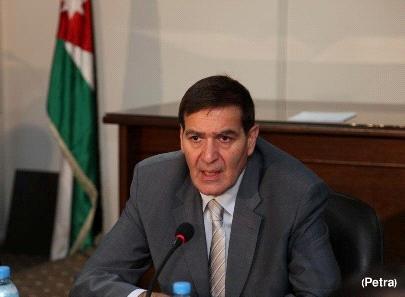
He reiterated that Jordan's nuclear programme is a strategic option for the Kingdom's energy future because it provides stable and safe source of energy away from global political volatility and market ups and downs. During a panel discussion at Petra moderated by its Director General Ramdan Rawashdeh, the minster highlighted steps taken in the Kingdom's nuclear programme, referring to technical bids submitted last July by three world companies for the construction of the country first nuclear reactor.
The minister added that the proposed site for the reactor will be near Kherbat Al Samra, 40 kilometers northeast of Amman, on a 2-kilometre plot of land. Water needed to cool down the reactor will come from Kherbat Al Samra sewage treatment plant which is located in the same area. On reasons behind refraining from the previous proposed site in Aqaba, Toukan explained that studies had showed many obstacles in terms of higher infrastructure cost and the topography of the site.
Last moth, the Jordan Atomic Energy Commission announced that it received financial offers from a consortium by France's Areva and Japan's Mitsubishi, Russia's Atomstroyexport and Atomic Energy of Canada, for the construction of the nuclear plant.
The kingdom has signed nuclear cooperation agreements with several countries such as France, Turkey, South Korea, China, Canada, Russia, Britain, Spain, Argentina, Japan, Romania and Italy.
Speaking on Jordan's reserves of Uranium, the minister said the Kingdom has rich deposits of uranium ore in the central region estimated at 65,000 tons. He linked the success of major national projects in areas of energy and water to the proposed nuclear programme. Toukan stressed that Jordan's water problem can only solved through the desalination of sea water and that technique needs cheap sources of energy.
By 2020, the minister added, current known water resources will not be enough to cover a third of Jordan's needs. He noted that the Red Sea-Dead Sea water conveyance project requires tremendous power estimated at 900 megawatts to desalinate 800 million cubic meter of water.
Toukan said that Jordan imports 98 percent of its energy not as it was previously known at 96 percent.
He expected that the Kingdom's fuel bill go up to comprise 22 percent of the Gross Domestic Product GDP in light of fluctuating gas supplies from Egypt.
The minister estimated that the debt of the National Electric Power Company will reach JD700 million because of subsiding electricity and resorting to heavy fuel to generate electricity.
In previous remarks to Petra, Toukan said fluctuating gas supplies from Egypt could cost Jordan $1 billion by yearend as the Kingdom is heavily resorting to diesel and heavy fuel to generate electricity.
Egyptian gas supplies had resumed a month ago following a spate of attacks on gas pipelines and terminals in the Sinai Peninsula. Speaking on a project for the exploration of deep gas reserves in the eastern Risha gas field, the minister said that British Petroleum BP had completed a three-dimensional (3-D) seismic survey of the area, adding that results will be "clear" by the next summer. In 2010, Jordan imported 97 percent of its energy needs at a total cost of $4 billion, comprising 20 percent of Gross Domestic Product GDP.
Demand on electricity in the Kingdom grows 6 percent every year, official data showed.
*Petra



 comment replay











 الرجاء الانتظار ...